The Architectural Styles
of the San Gabriel Valley
The eleven styles behind the San Gabriel Valley's older homes, from Queen Anne Victorian to Mid-Century Modern, and the two movements that set off its biggest building booms.
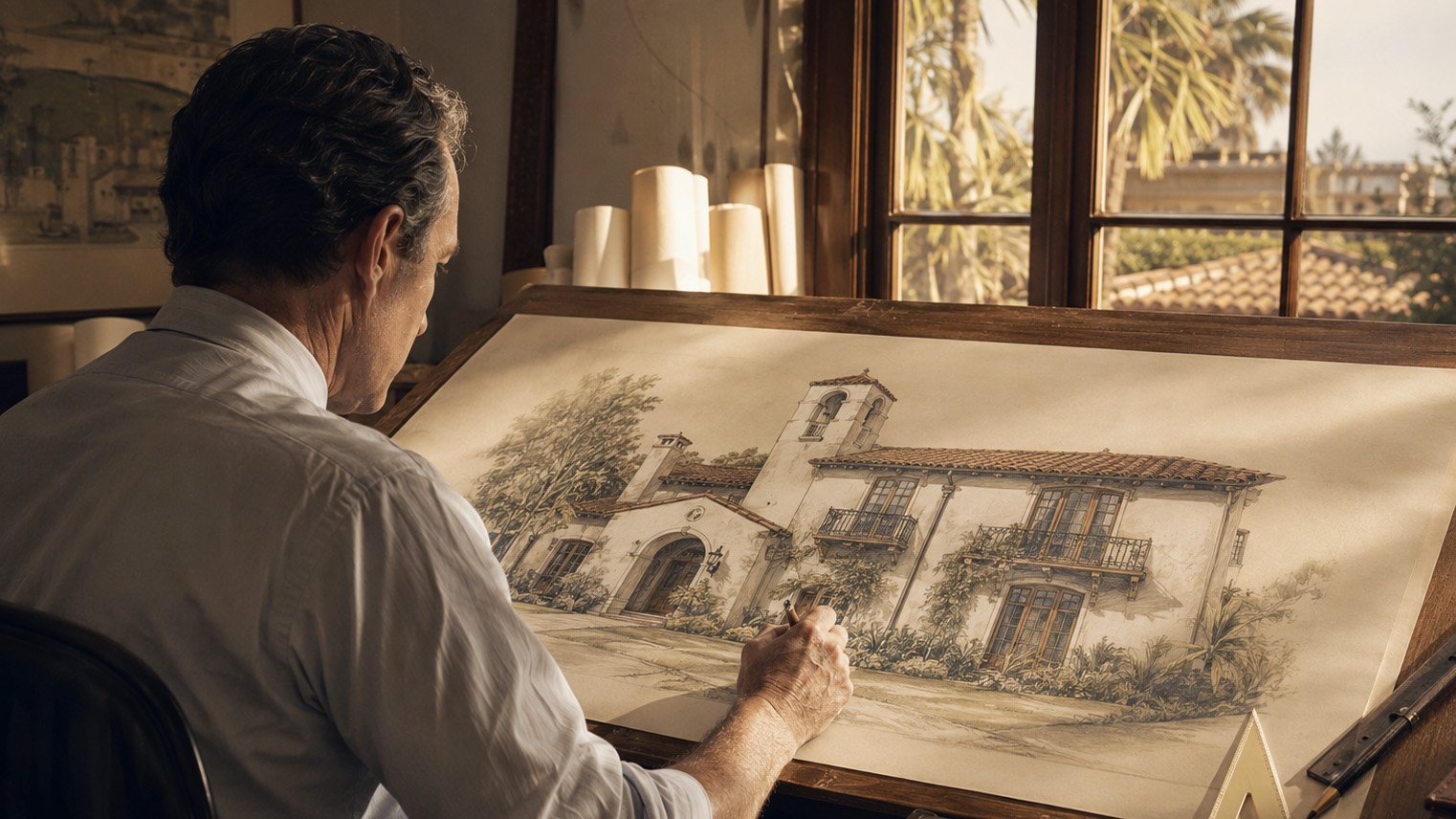
The San Gabriel Valley wears its history on the street. On a single block you can pass a turreted Queen Anne from the 1880s, a shingled Craftsman from the 1910s, a white walled Spanish Colonial Revival from the 1920s, and a glass walled Mid-Century Modern from the postwar years, every one of them still doing the job it was built to do. Eleven styles account for nearly every older home of note in this valley, and behind them sit two movements that set off the biggest building booms it ever saw.
When I walk a street in Pasadena or San Marino, I read the houses the way a builder reads them: by era, by framing, by the details a style commits to. That eye came from twenty years as a custom home builder, where finish carpentry was the specialty side of the work, and it has served the California real estate license I have held since 1990.
What architectural styles will I find in the San Gabriel Valley?
Eleven house styles account for nearly every older home of note in the San Gabriel Valley: Queen Anne Victorian, Folk Victorian, Craftsman, American Foursquare, Mission Revival, Spanish Colonial Revival, Mediterranean Revival, Monterey Colonial, Italian Renaissance Revival, Tudor Revival, and Mid-Century Modern. Behind them sit two stories that explain where the biggest building booms came from: the Arts and Crafts Movement, which made Pasadena a world center of handcrafted architecture, and the Spanish Revival Wave, which remade the valley after 1915. Each one has its own page here, with the features that identify it, the neighborhoods where it built out heaviest, and the architects who worked it.
What are the oldest home styles in the San Gabriel Valley?
The oldest surviving homes in the valley are Victorians from the 1880s and 1890s. Queen Anne Victorian is the ornamental peak, with turrets, stained glass, and asymmetrical massing; the Queen Anne Cottage at the Los Angeles County Arboretum in Arcadia, built 1885 to 1886 for Lucky Baldwin, is a National Register landmark and the finest local reference for the style. Folk Victorian is the working family’s version of the same era, built from pattern books, carrying Victorian trim on a simpler frame. Both survive in the oldest neighborhoods of Pasadena, Monrovia, Sierra Madre, Alhambra, and South Pasadena. Well preserved examples are increasingly rare, which matters for what they command; more on that in the value answer below.
Why is the San Gabriel Valley famous for Craftsman homes?
Because Pasadena did Craftsman better than anywhere else in America. Between roughly 1900 and 1930, the Craftsman style rose here as a reaction against Victorian ornament and factory production, and Pasadena became its capital. Greene and Greene built the ultimate bungalows at the high end, the Gamble House among them, while airplane bungalows put the same style within reach of the middle class across South Pasadena, Alhambra, Sierra Madre, and every foothill community developing in that decade. Pasadena’s Bungalow Heaven, the first landmark district the city ever created, holds more than 800 Craftsman homes built between 1900 and 1930, one of the largest concentrations of the style in California. The American Foursquare ran alongside as the boxy cousin that gave a family more house on a modest lot. The rebellion behind the whole boom, from English workshops to the Arroyo Seco, is told on the Arts and Crafts Movement page.
Why are there so many Spanish style homes in the San Gabriel Valley?
A fair started it. The 1915 Panama-California Exposition in San Diego set off a wave of Spanish and Mediterranean building that swept Southern California for thirty years, and the valley caught it fully. Mission Revival came first, drawn from the California missions themselves and predating the rest by roughly twenty years. Spanish Colonial Revival then dominated the valley’s finest neighborhoods between the wars, especially San Marino, San Gabriel, and Pasadena’s Madison Heights and Oak Knoll, with Wallace Neff shaping the estate version more than any other single hand. Mediterranean Revival carried the same wave with more Italian in its blood, and Monterey Colonial added the signature second floor balcony, a pattern Roland Coate and Sylvanus Marston both drew often, concentrated in San Gabriel and Arcadia. The whole story, from the exposition to Pasadena City Hall, runs on the Spanish Revival Wave page.
Where did the San Gabriel Valley’s Tudor and Italian style homes come from?
The same 1920s money that built the valley’s Spanish estates also built English and Italian ones. Tudor Revival was the English country answer to the Mediterranean styles, popular in the upscale neighborhoods of the 1920s and 1930s, with notable concentrations in Pasadena’s Oak Knoll, San Marino, and La Canada Flintridge, running from full estate Tudors down to storybook cottages. Italian Renaissance Revival is the formal classical style reserved for select prestige residences, often by Myron Hunt and his contemporaries, concentrated in San Marino and along Pasadena’s Orange Grove Boulevard.
Are there Mid-Century Modern homes in the San Gabriel Valley?
Yes, and good ones. Readers tie the style to Palm Springs and the westside, but the postwar decades brought Mid-Century Modern to the valley through a smaller and influential group of practices: A. Quincy Jones, Buff and Hensman, Smith and Williams, and H. Roy Kelley. Their work emphasized indoor outdoor flow, honest structure, and integration with the site, and it survives in Pasadena’s Madison Heights, San Marino, La Canada Flintridge, and the postwar tracts across the foothills.
How do I tell what style my San Gabriel Valley home is?
Start with the street, not the porch. Styles here arrived in waves, so your home’s era, which its city and tract tell you, narrows the field before you look at a single detail. A pre-1920 tract in Pasadena or South Pasadena puts the odds on Craftsman or American Foursquare. A 1920s estate belt in San Marino points toward Spanish Colonial Revival or Mediterranean Revival. A postwar tract in La Canada Flintridge starts the read at Mid-Century Modern. Then confirm with the details, because every style commits to features the others do not. Finish carpentry was my specialty through two decades of building custom homes, and the joinery, the proportions, and the trim will tell you what a house is before the paint color says anything. Every style page on this site carries an identifying section that walks those features one by one. If the curb still will not settle it, ask me directly.
Does my home’s style affect its value in the San Gabriel Valley?
Yes. In this valley, style is not decoration, it is provenance. Well preserved examples of the older styles are getting scarcer every year, and scarcity in a recognized style, in a recognized neighborhood, draws a deeper pool of buyers who know exactly what they are looking at. A Craftsman inside Pasadena’s Bungalow Heaven Landmark District, a Wallace Neff Spanish Colonial Revival in San Marino, a documented Folk Victorian in Monrovia: these carry their history into their price. Each style page here carries a market section with the current picture for that style. What a specific house is worth is comparables work, and the path through that starts on the buying guide. If the house in question is yours, or one you are standing in front of, ask me directly.
The full roster
- Queen Anne Victorian: the elaborate 1880s peak, turrets and stained glass, the Queen Anne Cottage in Arcadia its finest local example.
- Folk Victorian: the pattern book Victorian of working families, increasingly rare well preserved.
- Craftsman: the style Pasadena is remembered by, 1900 to 1930, more than 800 strong in Bungalow Heaven alone.
- American Foursquare: the two story box that ran alongside the Craftsman, more house on a modest lot.
- Arts and Crafts Movement: the story of the rebellion behind the Craftsman boom, from English workshops to the Arroyo Seco.
- Mission Revival: the earliest Spanish style, drawn from the missions themselves, small but significant inventory.
- Spanish Colonial Revival: the estate style of the interwar years, San Marino and Pasadena its strongholds.
- Mediterranean Revival: the Spanish wave with Italian blood, common in 1920s estate construction.
- Monterey Colonial: Spanish meets New England under one full width balcony, San Gabriel and Arcadia.
- Italian Renaissance Revival: formal classical prestige, Myron Hunt country.
- The Spanish Revival Wave: the story of the thirty year wave that remade the valley after 1915.
- Tudor Revival: the English country answer, Oak Knoll and La Canada Flintridge.
- Mid-Century Modern: the postwar arrival, indoor outdoor flow in the foothill tracts.
Three lenses on the valley’s architecture
The styles named here are one of three ways through this site. Architects: who designed it. Styles: what they designed, this page. Communities: where it stands. A reader looking at a house in San Marino can move from its style to its architect to its community and back without leaving the site. If you have a question about a specific style, a specific house, or a specific city in the San Gabriel Valley, ask me directly.
Last updated